UP | HOME

SaxonRosary

I picked up a pair of Saxon pectoral crosses and a rosary. The seller notes

All of my rosaries are inspired by traditional designs and folk art from across the length and breadth of the Christian world; they are hand-crafted here in England.

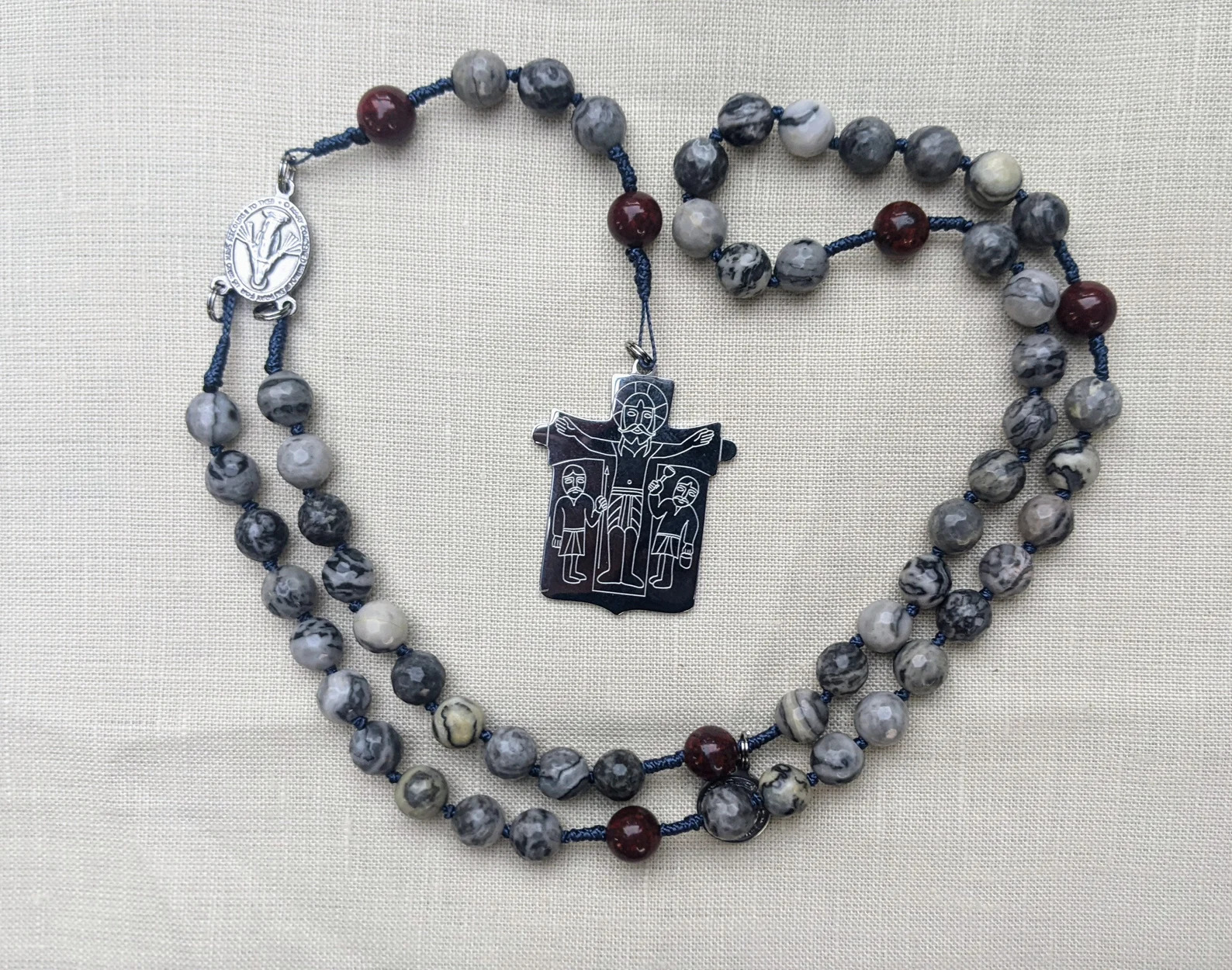
The Saxon Catholic Rosary
rosary.jpg

This rosary is really unusual, inspired by Early English Christian art. It's made of real gemstones (red jasper), and each bead is individual hand-knotted in the same way high-quality pearls were traditionally strung. This takes a long time, but it protects each and every stone by cushioning it with cord, at the same time as spacing the stones evenly. It is tightly tied and will naturally loosen with use.

About the cross

The design of this cross is inspired by late Saxon carvings (probably finished in the immediate decades before the Norman Conquest of England). Anglo-Saxon portrayals of Christ seldom show Christ in agony as later Medieval art would, and here he is shown in, flanked by Longinus (with the spear) and the Roman solider who have him vinegar on the cross (traditionally referred to as Stephaton). The reverse of this cross shows Christ seated in majesty, and owes much to the Byzantine influence of the early English church in terms of iconography.

About the stones

As with all natural stones, there is slight variation to each bead. These faceted grey beads have strata of black and white, creating a marbling effect.

Large Scottish High Cross
scots.jpg

About the cross

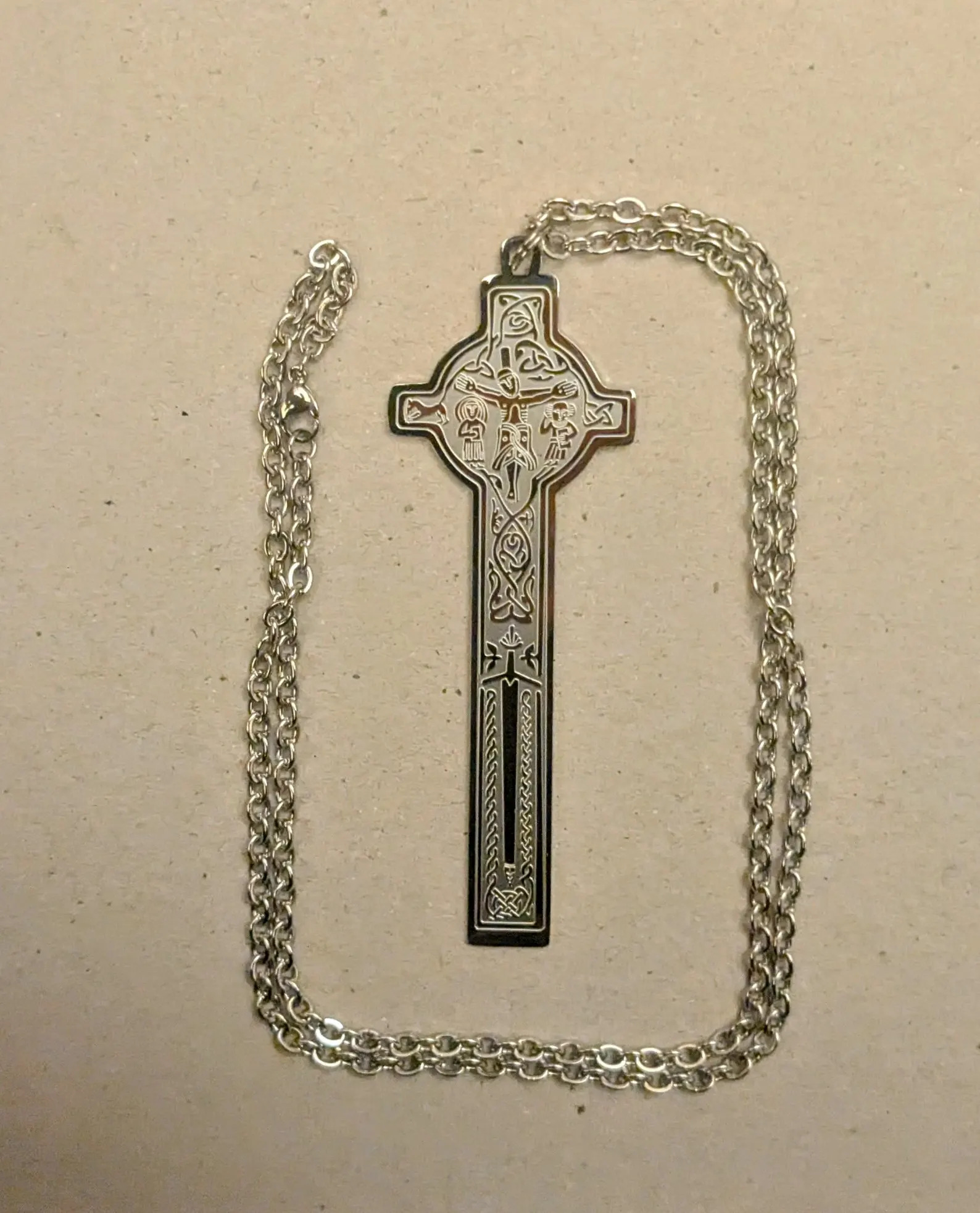
This large cross is a careful replica of the MacMillan Cross, which was carved in the late 15th century and now stands in Kilmory Knap Chapel on the western coast of Scotland (in Argyll and Bute).

The front shows Christ crucified and flanked by the Virgin Mary and John the Baptist. Below them, on the shaft of the cross is a claymore sword (in Scots Gaelic, ‘claidheamh-mòr' i.e. great sword). The reverse features Celtic knotwork above a hunting scene, where a kilted and bearded hunter chases after a stag with a pack of hounds.

Celtic Pectoral Cross
manx.jpg

About the cross:

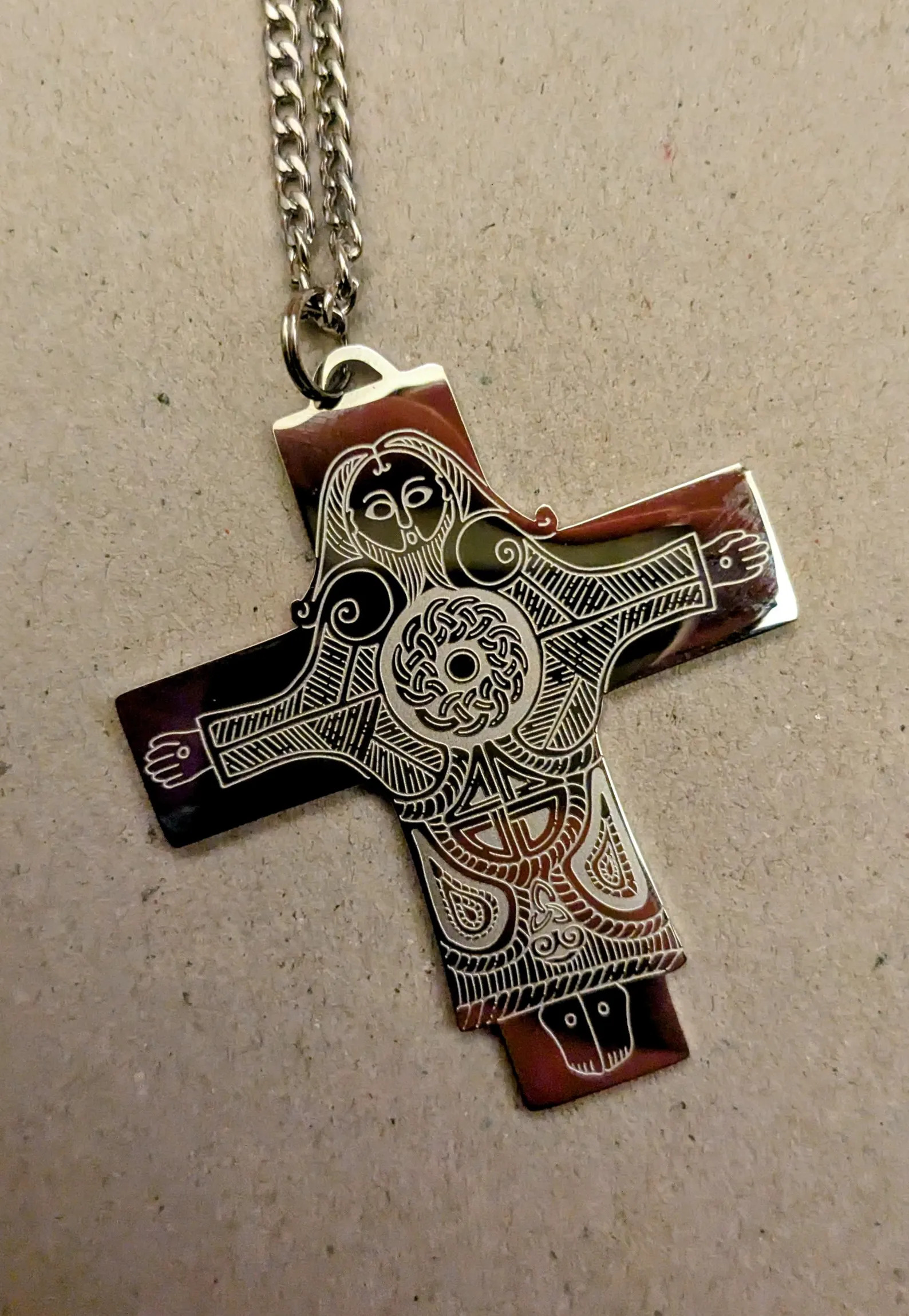
This cross is based very closely on a Celtic cross, found on the Calf of Man (a small island of the Southern tip of the Isle of Man in the Irish Sea). The original was carved into slate (most likely in the 8th century), and was probably an altar back (reredos) in a small beehive church, like those of Skellig Michael off the coast of Kerry. Stylistically, it is very similar to crucifixion plaque from Ireland of the same time period.

On the reverse is the image of St Longinus with the spear of destiny, which appeared to the side of the crucifix on the original.

A variety

I bought more; rather than individual pictures, I have one of all of them (and the Saxon rosary too).

many.jpg

Lent Rosary

This large cross depicts the Stations of the Cross - the events of Christ's route from His condemnation by Pontius Pilate to Golgotha (Calvary), where His crucifixion took place. The stations of the cross is traditional Catholic devotion (particularly prominent during Lent) and are depicted in all parish churches. This cross shows those stations in a rugged, and portable design.

The front of this medal has a unique image of the Holy Face of Christ, also known as the Image of Edessa or the Holy Mandylion. Some think that the Eastern relic depicted here may have made its way to the West where it became known as the Shroud of Turin.

The other side shows a traditional Eastern Orthodox calvary scene in fine detail. That is the cross, flanked by the spear and sponge on the hill of Golgotha outside the city of Jerusalem.

Medieval-style Rosary

This cross is based on an Anglo-Saxon gold cross, studded with garnets, that was found in the tomb of St Cuthbert at Durham Cathedral in the North of England (in the same building here the Venerable Bede is buried – now a doctor of the church). The original was one-sided and had no corpus. This historic reproduction bears a corpus, drawn in a fitting historical style.

This rosary is inspired by late medieval Paternoster beads, including one found on Henry VIII's Mary Rose.

Venerable Fulton Sheen Medal

This medal is an orignal design featuring the Venerable Fulton Sheen. The figure is based on an iconic picture of the prelate in choir dress, from which stylised radio waves emulate; and the text is in an art deco style of calligraphy to reflect the life and times of the archbishop. The text is a quoation and reads: 'Nothing ever happens in the world that does not already happen in human hearts.' At the centre is an invocation for the saint to pray for us.

The reverse of the medal shows his coat of arms and motto: 'Da per matrem me venire.'

Medieval Miraculous Medal

A uniquely re-designed Miraculous Medal, based on details and decorative forms found in Anglo-Saxon manuscripts.

The Miraculous Medal features the text in Latin in the Insular Uncial Calligraphic style, and detailing drawn from illuminated manuscript from before the Norman Conquest, including an 'M' based on one found in the Lindisfarne Gospels.

Medieval St. Benedict's Medal

This is a uniquely re-designed St Benedict's Medal, based on details and decorative forms found in Anglo-Saxon manuscripts.

The St Benedict's Medal depicts the saint as an early medieval abbot, with scroll-work rather than the more common book (as saints are commonly depicted in the Insular style). The cross on the reverse is based on the gold and garnet Ixworth cross, thought to date back to the 7th century (and currently held in the Ashmolean Museum in Oxford).

15 Decade Rosary, with unique steel cross and steel beads

This rosary is designed to be worn as part of a religious habit. It has a genuine leather belt loop, making it particularly suitable for Dominicans (the Order of Preachers) and Franciscans and is handmade using some very strong materials (US paracord, stainless steel and brass) making it the toughest 15 decade rosary I've seen available.

About the crucifix: This large cross is closely based on a 16th century etching by the renowned artist Albrecht Dürer. It shows Jesus Chrrist crucified, surrounded by angels who collect the precious blood in chalices. On its reverse are etched traditional prayers associated with eucharistic adoration: the Tantum Ergo and the Anima Christi (both here in Latin).

About the centre medal: This centre medal is celebration of holy heraldry. The front shows the armorial bearings of: St Philip Howard (a martyr of the Reformation), Blessed Karl of Austria and St Edmund the Martyr. Below those are: Sts Thomas More, John Henry Newman and Thomas Beckett.

The reverse shows: St Edward the Confessor, Constantine XI Paleologus (the last emperor of, considered blessed by the Greek Catholic Church) and St Louis of France. Below those are: Sts Charles de Foucauld, Josaphat and Joan of Arc.

The top row also depicts the crowns and coronets (in the case of St Philip Howard, who was an earl) of those saints where the design of their specific crowns are known and a suitable historical where they are not.